

mission
At 1350 Design, our mission is to save lives and strengthen warfighters by delivering autonomous systems and energy-efficient technologies that extend human capability while reducing technological and energy footprints. We build resilient, adaptive solutions that act with speed, precision, and transparency—empowering those on the front lines to make better decisions, reduce risk, and protect both people and critical resources in contested environments.
vision
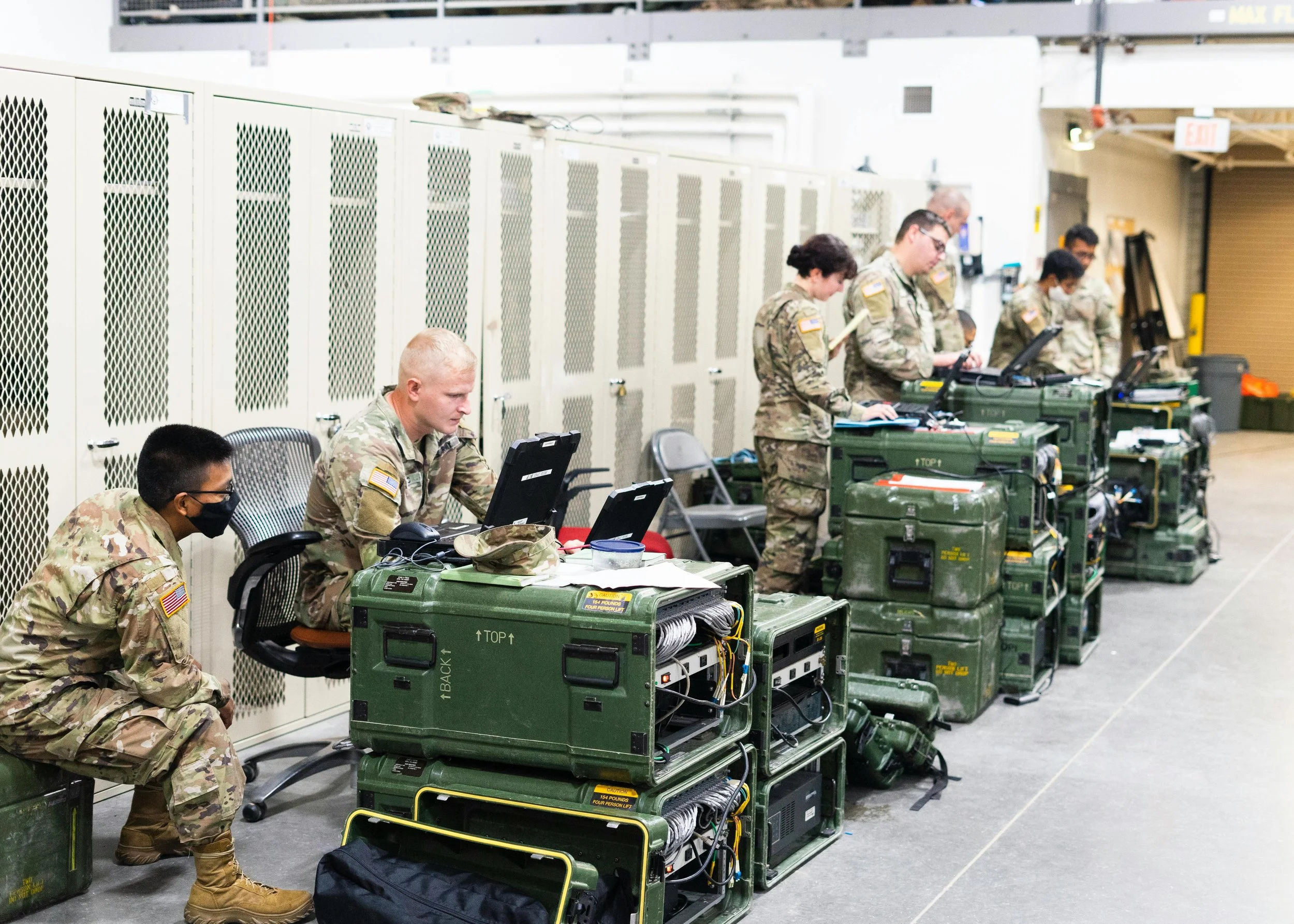
At 1350 Design, we envision a future where edge-based autonomous systems form a resilient, adaptive, and intelligent network that extends human capability and protects warfighters across every domain. These trusted systems act with speed, precision, and consistency, free from the limitations of fatigue or error yet fully aligned with human intent and oversight.
At their core, these systems operate as a collective mesh: each node continuously senses, interprets, learns, acts, and shares updates in real time, ensuring every new insight strengthens the whole network. This dynamic process transforms at-the-edge ISR (Intelligence, Surveillance, Reconnaissance) and operational decision-making into a living, adaptive system that grows more capable with every observation and interaction.
These systems is decentralized by design, combining autonomous nodes with seamless high-speed architectures that enable distributed intelligence, resilience, and scalability, allowing the network to endure, adapt, and evolve even under contested or degraded conditions.
Through initiatives like Siren Song, which provides the operational layer of meshed ISR across air, land, sea, space, and cyber domains, and NEBIS (Neural Edge Based Intelligence System), which delivers the architectural foundation for distributed processing and control, we are creating systems defined by:
· Precision and reliability in execution,
· Continuous improvement through real-time collective updating,
· Resilience through distributed design, and
· Ethical alignment and human transparency that secure trust in autonomous partners.
This vision is not simply about creating smarter machines; it is about building trusted unmanned partners at the edge - autonomous systems that enhance human decision-making, reduce uncertainty, and transform ISR into a collective adaptive, and informed force that delivers decisive command advantage for JADC2 goals.
Values & Principles
-
Mission First – Warfighter Always
We exist to protect those who serve. Every solution we design aims to reduce risk to warfighters, strengthen decision advantage, and save lives.
-
TrustED, Human -aligned Autonomy
We believe autonomy must earn trust. Our systems are transparent, ethically aligned, and built to enhance—not replace—human judgment.
-
Resilience by Design
We prioritize distributed, adaptive architectures that remain reliable and effective even in contested or degraded environments.
-
Precision & Energy discipline
Deliver capability with minimal footprint—optimized for SWaP-E to conserve power, simplify logistics, and increase endurance.
-
Interoperability & Standards
Open, modular interfaces for multi-domain integration and JADC2 alignment—so capability scales across platforms and partners.
-
Integrity & Accountability
We hold ourselves to the highest standards of integrity and accountability, ensuring our work reflects our responsibility to warfighters, partners, and the mission.
our approach
Mission driven design
We start with the mission: reducing risk to the warfighter while increasing decision advantage. Every concept, from system architecture to interface design, is measured against its ability to improve survivability, speed, and precision at the tactical edge.
Hardware-Enabled, Software-Defined
Our platforms are engineered to provide a stable, efficient hardware foundation built to host advanced software. This separation allows secure, validated software updates without redesigning the hardware—reducing cost, complexity, and energy use while enabling rapid capability evolution.
Edge-First Autonomy
We bring intelligence to the edge. By enabling distributed, networked autonomy—rather than relying on distant centralized control—our systems operate with speed, resilience, and adaptability even in contested or degraded environments.
Human-Aligned Autonomy
Technology must serve, not replace, human judgment. We design autonomy that is transparent, explainable, and under operator control, ensuring trust and ethical use.
Resilient, Open Architectures
We build systems that are modular, interoperable, and standards-driven. This ensures that capabilities can be integrated across domains and upgraded over time, avoiding vendor lock-in and enabling coalition and joint-force cooperation.
Precision with a Lighter Footprint
We focus on efficiency—achieving superior performance with smaller, more power-efficient systems. This reduces the logistical and environmental burden while enhancing endurance and field adaptability.


leadership
Rob Williams is the CEO of 1350 Design, and a recently retired U.S. Naval Officer with 25 years of distinguished service, including seven combat deployments as a Navy SEAL. He holds a B.S. in Aerospace/Aeronautical Engineering with a minor in mathematics and composites from Embry-Riddle Aeronautical University, and an M.S. in Ocean/Mechanical Engineering from MIT, specializing in unmanned systems.